

Hermandad Mexicana Nacional
Does Using Medi-Cal or Other Benefits Make Me a "Public Charge"? What You Need to Know
Many families are afraid to use Medi-Cal, CalFresh or other benefits. Here is which ones count for public charge, which do not, and who the test applies to.
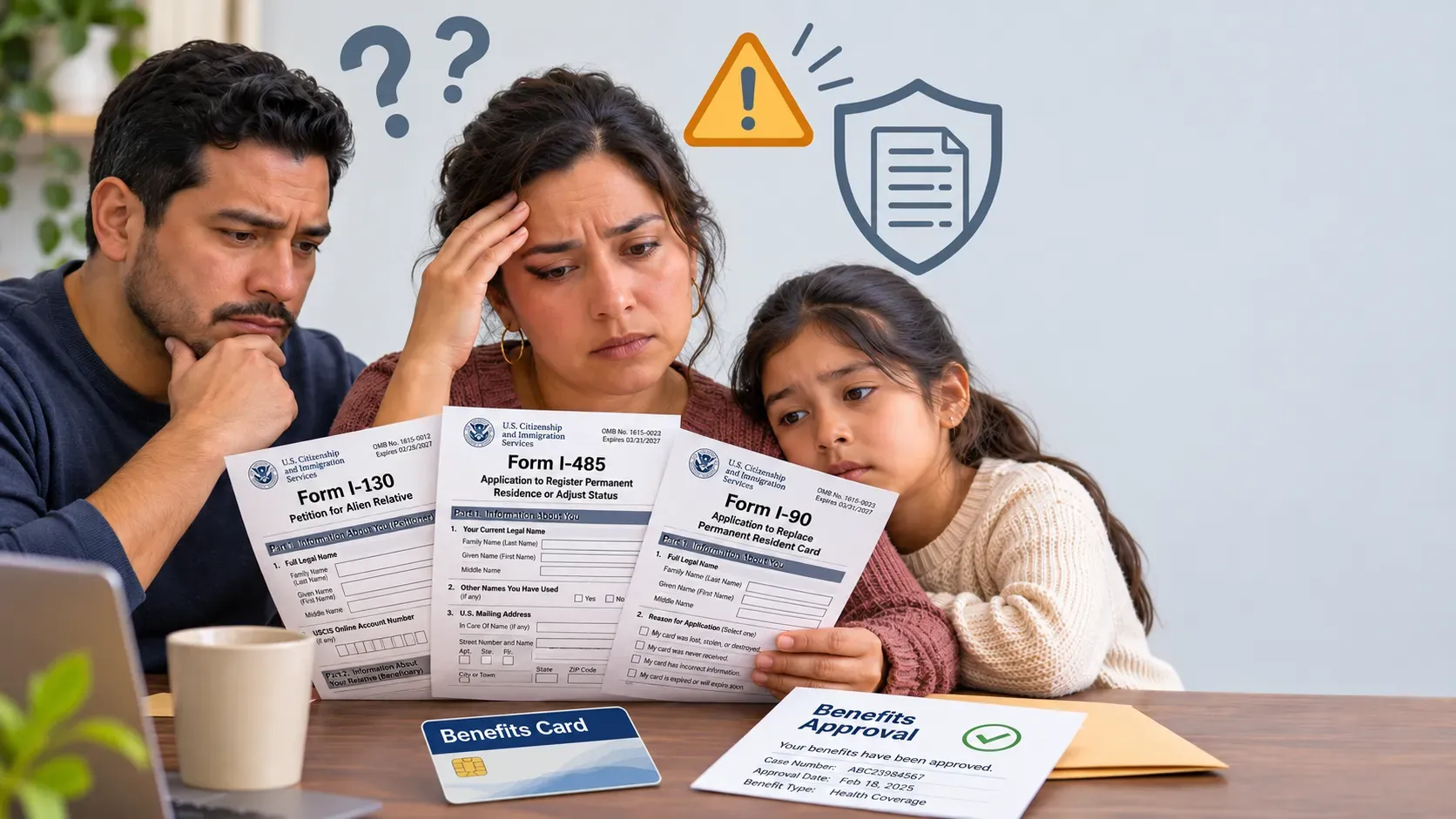
TODO-STAFF: when approving, fill in "Last reviewed" (Safeguards tab) so "Last reviewed: {date}" shows at the top. Delete every TODO-STAFF line before publishing.
TODO-STAFF: confirm "The short answer" against the rule in effect today, on USCIS's official public charge page.
Which benefits count, and which do not?
TODO-STAFF: verify this whole section against the rule in effect today. It is written with the 2022 rule as the starting point.
Under the 2022 rule, generally only these counted:
- Cash help, like SSI, TANF cash aid (in California, CalWORKs) and state or county cash assistance.
- Long-term care in an institution (for example, a nursing home) paid for by the government.
Under that same rule, benefits that are not cash generally did not count, such as:
- Most Medi-Cal.
- CalFresh (SNAP), help buying food.
- WIC.
- Help with housing.
- School meals.
- Benefits used by other people in your family, like children who are U.S. citizens.
What does "public charge" mean?
"Public charge" is a test the government uses when someone applies for certain visas or a green card. For example, when a relative asks for a green card for them through a family petition or adjustment of status.
The test tries to decide if the person is likely to depend mainly on certain government cash help. It is not a punishment for asking for help, and it does not apply to everyone.
Who does it apply to, and who does it NOT apply to?
TODO-STAFF: confirm both lists against USCIS's official page.
It usually applies to:
- People applying for a green card through a relative (adjustment of status or consular processing).
- Some people applying for certain visas.
It usually does NOT apply to:
- Green card holders renewing or replacing their card (Form I-90).
- People applying for citizenship (naturalization).
- Refugees and asylees.
- People applying for a U visa, a T visa or VAWA protection.
- Special Immigrant Juveniles (SIJ).
- Other humanitarian categories.
One important exception: if you are a green card holder and you leave the United States for a long time (more than 180 days), you may be treated differently when you come back. Talk to us before a long trip.
TODO-STAFF: confirm the long-trip exception (more than 180 days).
What has changed, or what is being proposed?
TODO-STAFF: write the CURRENT status of the public charge rule here (whether there is a new proposed or final rule, what it says and the date it takes effect), based on USCIS's official page. Do not publish this section until it is filled in. If nothing has changed, say that the 2022 rule is still in effect and the date you checked.
Common myths
Does using Medi-Cal, CalFresh or other benefits count for public charge?
Under the 2022 rule, generally no: most Medi-Cal, CalFresh, WIC and housing help did not count. In general, only cash help (like SSI or CalWORKs) and long-term care in an institution paid by the government counted.
"If I renew my green card and I have Medi-Cal, they'll take my green card away."
That is not how it works. Renewing with Form I-90 is generally not a public charge review, and under the 2022 rule most Medi-Cal did not count. If you have questions about your case, talk to us.
"My children's benefits will count against me."
Under the 2022 rule, benefits used by other family members, such as U.S.-citizen children, did not count against you.
"I should cancel my benefits before applying for citizenship."
The public charge test usually does not apply to people applying for citizenship. Do not cancel benefits you need without talking to us first.
"Using food assistance will stop my family petition."
Under the 2022 rule, CalFresh (SNAP) and other food help did not count in the public charge test. Every case is different: let's review yours together.
When should you talk to us?
Book a consultation if you:
- Plan to apply for a green card for yourself or a relative.
- Will sponsor someone (affidavit of support, Form I-864).
- Plan to travel outside the United States for a long time.
- Are not sure if this affects you.
This is general information, not legal advice. Every case is different. To talk about your situation, book a consultation at any of our offices or online, or call us at (424) 456-6000.
Sources
TODO-STAFF: check the source below and add any other official source you used.
Questions about your case?
Book a consultation with our accredited team. We help you in English and Spanish, in person, by phone or by video.